

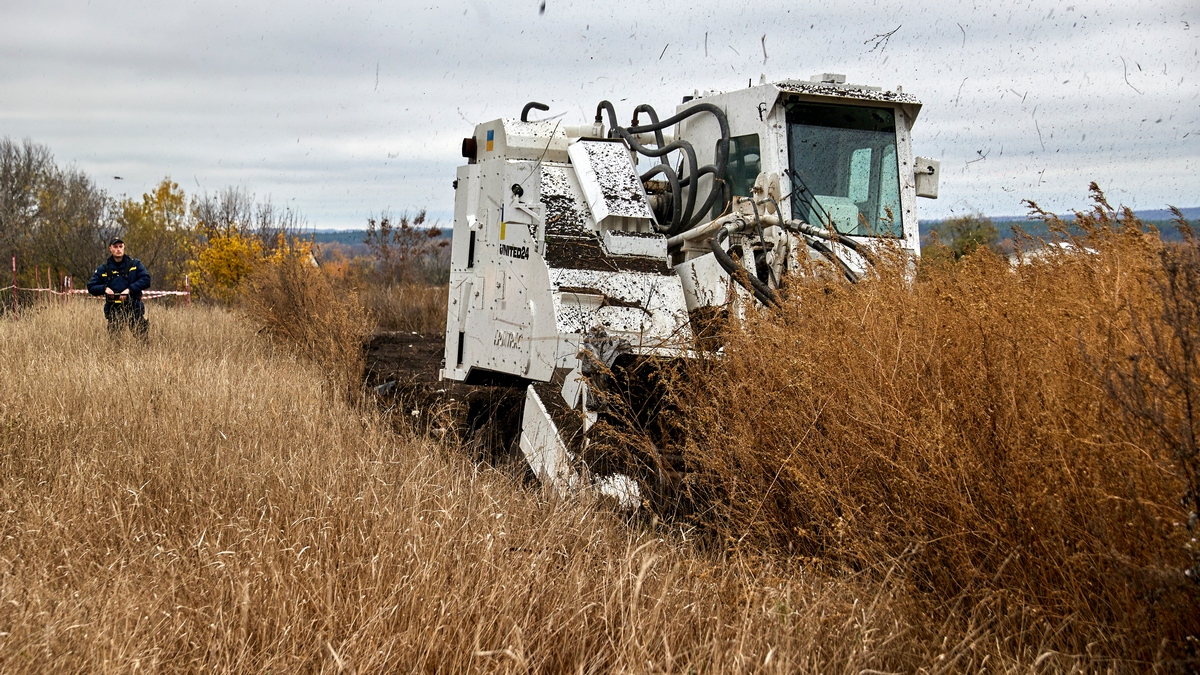
Despite the Ukrainian government’s commitment to fully financing the clearance of explosive remnants from agricultural lands, a parallel illegal demining industry has quietly taken root across the country’s war-affected regions. This shadow market has emerged as farmers and landowners, desperate to return their fields to productive use, turn to unlicensed operators who promise faster results than official channels can deliver. The phenomenon highlights a growing tension between safety protocols and economic necessity in a nation where agriculture remains a critical pillar of both the domestic economy and global food security.
The Scale of Ukraine’s Contamination Crisis
Ukraine now holds the unfortunate distinction of being one of the most heavily mined countries in the world. According to various estimates, approximately 30 percent of Ukrainian territory may be contaminated with explosive remnants of war, including landmines, cluster munitions, and unexploded artillery shells. This contamination spans an area roughly the size of several European countries combined, affecting millions of hectares of prime agricultural land. The scale of the problem is unprecedented in modern European history, with experts suggesting that complete clearance using current methods and resources could take decades rather than years.
The agricultural sector has been particularly hard hit by this crisis. Ukraine, often called the “breadbasket of Europe,” was responsible for approximately 10 percent of global wheat exports before the full-scale invasion began in February 2022. Farmers in regions such as Kherson, Zaporizhzhia, Kharkiv, and parts of Donetsk and Luhansk oblasts now face the impossible choice of leaving productive land fallow or risking their lives to cultivate potentially dangerous fields. The economic pressure is immense, with many farming operations facing bankruptcy if they cannot access their land within reasonable timeframes.
Why Farmers Turn to Illegal Operators
The official demining process in Ukraine, while free of charge for landowners, involves extensive bureaucratic procedures and significant waiting times. The State Emergency Service and certified private companies conduct systematic surveys, mapping, and clearance operations according to international humanitarian demining standards. However, the demand for these services far outstrips the available capacity. Some landowners report waiting periods of months or even years before official teams can address their properties. For farmers operating on tight seasonal schedules and facing mounting financial pressures, such delays can prove economically devastating.
Into this gap have stepped unlicensed operators offering expedited services for payment. These shadow market participants range from former military personnel with explosive ordnance disposal experience to opportunistic individuals with minimal training and equipment. Prices vary widely depending on the size of the plot, suspected contamination levels, and the operator’s reputation. While some of these informal deminers possess genuine expertise, others rely on crude detection methods and dangerous improvisation. The risks extend beyond the operators themselves to the farmers who may receive false assurances that their land is safe, potentially leading to tragic accidents during subsequent agricultural activities.
Safety Concerns and Regulatory Challenges
International humanitarian organizations have expressed serious concerns about the growth of informal demining activities. The Geneva International Centre for Humanitarian Demining and other bodies emphasize that proper clearance requires systematic approaches, quality management, and rigorous documentation. Unofficial operators typically cannot provide the certification and guarantees that protect landowners from future liability or ensure comprehensive clearance. Moreover, incidents involving amateur deminers can result in casualties and may actually complicate future professional clearance efforts by disturbing explosive remnants without properly neutralizing or removing them.
Ukrainian authorities face a delicate balancing act in addressing this phenomenon. Strict enforcement against illegal demining could drive operations further underground while doing little to address the underlying capacity shortage. Meanwhile, international donors have pledged significant funding for demining efforts, but translating these commitments into operational capacity on the ground takes time. Training qualified personnel, acquiring specialized equipment, and establishing the logistical infrastructure for nationwide clearance operations represents a multi-year undertaking. Some experts have called for innovative approaches, including expedited certification programs for experienced individuals and greater integration of commercial technology solutions such as drones and artificial intelligence-assisted detection systems.
Expert Opinion: The emergence of a shadow demining market in Ukraine reflects a fundamental mismatch between the urgent economic needs of agricultural communities and the necessarily methodical pace of safe humanitarian demining operations. International donors and Ukrainian authorities must rapidly scale up certified clearance capacity while developing interim solutions that allow farmers to safely utilize portions of their land. Without such measures, the informal sector will continue to grow, potentially resulting in civilian casualties and undermining long-term food security in one of the world’s most important agricultural regions.