




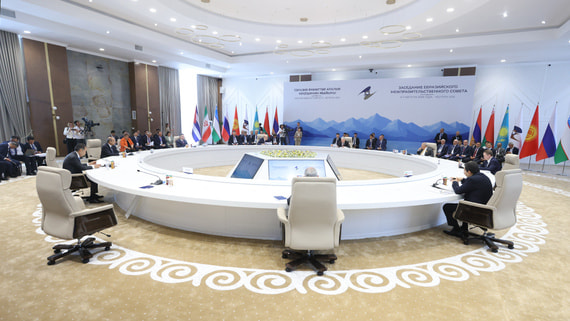
Russia’s Ministry of Economic Development has announced plans to synchronize electronic commerce legislation across all member states of the Eurasian Economic Union (EAEU). The initiative signals a major step toward creating a unified digital marketplace spanning five nations, with officials indicating that Russian domestic laws may be adjusted if necessary to achieve regulatory alignment. This harmonization effort comes as cross-border e-commerce continues to grow rapidly throughout the region, creating an urgent need for consistent legal frameworks governing online transactions.
The Eurasian Economic Union: A Growing Economic Bloc
The Eurasian Economic Union, established in 2015, brings together Russia, Belarus, Kazakhstan, Armenia, and Kyrgyzstan in an economic integration project that seeks to ensure the free movement of goods, services, capital, and labor. With a combined population of approximately 180 million people and a gross domestic product exceeding $2 trillion, the EAEU represents one of the world’s significant economic blocs. The union has already achieved substantial progress in eliminating customs barriers and harmonizing technical regulations, but digital commerce has remained an area where national laws still diverge significantly.
E-commerce within the EAEU has experienced explosive growth, particularly following the COVID-19 pandemic, which accelerated digital transformation across all member states. Russian online retail alone has grown to become one of Europe’s largest markets, while Kazakhstan and Belarus have seen their digital economies expand at double-digit rates annually. However, this rapid growth has also exposed significant gaps in cross-border consumer protection, dispute resolution mechanisms, and regulatory oversight that the new harmonization initiative aims to address.
Key Areas of Legislative Synchronization
The synchronization effort is expected to cover several critical areas of e-commerce regulation. These include consumer protection standards for online purchases, requirements for electronic contracts and digital signatures, data protection frameworks, and rules governing cross-border payment systems. Additionally, the initiative will likely address the treatment of digital goods and services, platform liability for third-party sellers, and mechanisms for resolving disputes between buyers and sellers located in different member states. Russian officials have emphasized that achieving true regulatory harmony may require modifications to existing Russian laws, demonstrating a willingness to adapt domestic frameworks for the broader goal of regional integration.
Industry experts have long argued that regulatory fragmentation poses one of the most significant barriers to e-commerce growth within the EAEU. Businesses operating across multiple member states currently face the challenge of complying with different sets of rules, increasing operational costs and legal complexity. For consumers, the lack of harmonized protections can create uncertainty when purchasing from vendors in other EAEU countries, potentially limiting the realization of benefits from the common market.
Implications for Businesses and Consumers
The proposed harmonization could bring substantial benefits to both businesses and consumers throughout the region. For e-commerce platforms and online retailers, a unified regulatory framework would simplify market expansion strategies and reduce compliance costs. Small and medium-sized enterprises, in particular, stand to gain from clearer rules that lower the barriers to cross-border trade. Consumers would benefit from consistent protection standards regardless of where a seller is based within the EAEU, potentially increasing confidence in cross-border online shopping.
However, the harmonization process also presents challenges. Each member state has developed its e-commerce regulations in response to local conditions, consumer expectations, and administrative capabilities. Finding common ground that satisfies all parties while maintaining high standards will require careful negotiation and potentially lengthy implementation timelines. Russia, as the largest economy in the bloc, will likely play a leading role in shaping the harmonized framework, though smaller members will seek to ensure their interests are adequately represented in the final regulations.
Looking Ahead: Digital Integration in the EAEU
This e-commerce harmonization initiative is part of a broader digital agenda within the EAEU. Previous efforts have focused on creating common standards for electronic document exchange, developing interoperable identification systems, and establishing shared approaches to cybersecurity. The union has also been working on a unified digital space that would facilitate everything from government services to commercial transactions across member states. The success of the e-commerce harmonization effort could pave the way for deeper digital integration in other areas, potentially positioning the EAEU as a model for regional digital cooperation.
Expert Opinion: The EAEU’s move toward e-commerce law harmonization reflects a strategic recognition that digital trade will be central to regional economic growth in the coming decade. While implementation challenges remain significant, particularly regarding varying levels of digital infrastructure across member states, successful harmonization could increase intra-regional e-commerce volumes by 25-40% within five years. Russia’s willingness to modify its own legislation signals serious commitment to this initiative, though the ultimate test will be whether smaller member states feel their regulatory concerns are genuinely incorporated into the unified framework.