




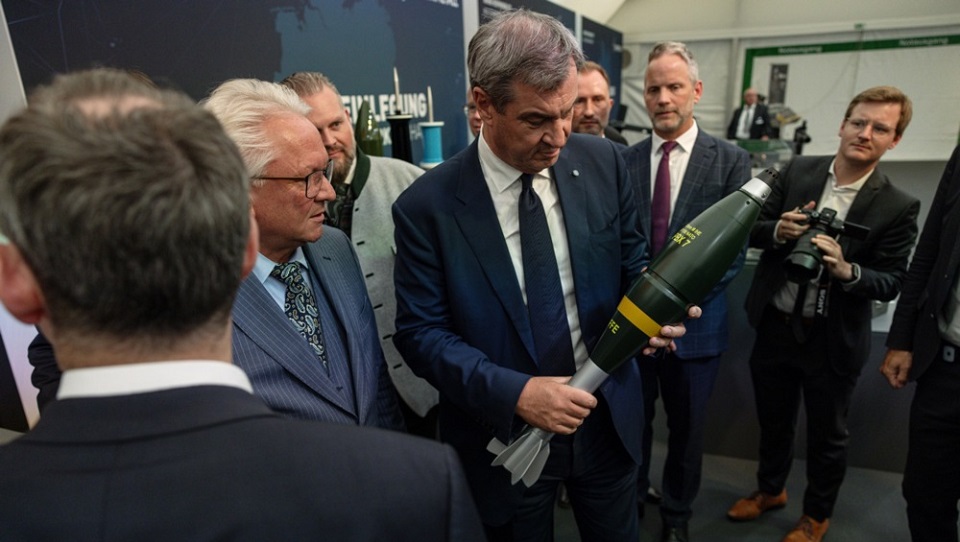
The German government is preparing a significant shift in its defense spending priorities, with plans to reduce expenditure on conventional ammunition starting in 2027. According to a Bloomberg report, Berlin intends to redirect military funds toward more advanced defense technologies, a decision that could have substantial implications for major defense contractors, particularly Rheinmetall AG, Europe’s largest ammunition manufacturer.
This strategic pivot comes at a critical juncture for European defense policy, as nations across the continent grapple with the need to modernize their armed forces while managing fiscal constraints. Germany, which announced a historic €100 billion special defense fund in 2022 following Russia’s invasion of Ukraine, is now recalibrating how these resources should be allocated for maximum strategic impact in an evolving threat landscape.
The Impact on Rheinmetall and the Defense Industry
Rheinmetall, headquartered in Düsseldorf, has experienced remarkable growth since the outbreak of the conflict in Ukraine. The company’s stock price has surged dramatically, and it has expanded production capacity significantly to meet increased demand from NATO allies seeking to replenish depleted stockpiles. The planned budget cuts represent a potential setback for the company’s ambitious growth trajectory, which has been heavily dependent on orders for artillery shells, tank ammunition, and other conventional munitions.
The defense giant has invested billions of euros in expanding its manufacturing capabilities, opening new production facilities across Europe and planning additional plants in Ukraine itself. A reduction in German government orders could force the company to seek alternative markets or accelerate its diversification into other defense segments, including autonomous systems, electronic warfare equipment, and advanced vehicle platforms.
Germany’s Evolving Defense Strategy
The decision to prioritize advanced military technologies reflects a broader strategic reassessment within the German Defense Ministry. Military planners increasingly recognize that future conflicts will be shaped by artificial intelligence, hypersonic weapons, cyber capabilities, and space-based systems rather than traditional artillery exchanges. The lessons from Ukraine have been nuanced – while the conflict demonstrated the continued importance of conventional ammunition, it also highlighted the decisive role of drones, electronic warfare, and precision-guided systems.
Germany’s defense budget has undergone dramatic transformation since the “Zeitenwende” or turning point declared by Chancellor Olaf Scholz in 2022. After decades of underinvestment that left the Bundeswehr critically underfunded, Germany committed to meeting NATO’s 2% GDP defense spending target. However, with competing demands on the federal budget, including climate initiatives, infrastructure modernization, and social programs, policymakers must make difficult choices about resource allocation.
European Security Implications
The German decision carries implications beyond its borders, potentially influencing defense procurement strategies across the European Union. As the bloc’s largest economy and a key NATO member, Germany’s priorities often shape broader European defense industrial policy. Some analysts warn that reducing ammunition spending prematurely could undermine efforts to build European strategic autonomy and maintain credible deterrence capabilities against potential adversaries.
NATO officials have repeatedly emphasized the need for member states to maintain robust ammunition stockpiles, particularly given the rapid consumption rates observed in Ukraine. The alliance has struggled to ramp up production fast enough to meet Ukrainian needs while rebuilding depleted reserves. Critics of the German plan argue that shifting resources away from ammunition too quickly could leave dangerous gaps in collective defense readiness, especially if conventional deterrence requirements prove more enduring than anticipated.
Expert Opinion: Germany’s planned pivot toward advanced military technologies represents a calculated gamble that the future of warfare will be dominated by high-tech systems rather than traditional munitions. While this strategic foresight may prove prescient in the long term, the timing raises concerns about near-term readiness gaps. Defense planners must balance modernization imperatives against the immediate need to maintain credible conventional deterrence, particularly as geopolitical tensions remain elevated across Europe’s eastern flank.