




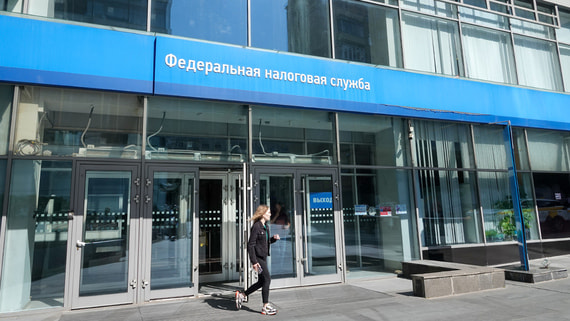
The number of currency law violations committed by Russian citizens with foreign bank accounts has decreased notably over the past year, according to recent data from Russian tax authorities. This decline comes amid an increasingly sophisticated regulatory environment and enhanced monitoring capabilities that have fundamentally changed how authorities track cross-border financial activities. Legal experts attribute this trend to both expanded oversight mechanisms and a more comprehensive approach by tax officials when evaluating potential infractions related to foreign-held assets.
Enhanced Regulatory Framework Drives Compliance
The reduction in violations reflects years of systematic efforts by Russian authorities to strengthen control over citizens’ foreign financial activities. Since the introduction of mandatory reporting requirements for foreign accounts, the Federal Tax Service has progressively refined its detection methods and information-gathering capabilities. The automatic exchange of financial information under the Common Reporting Standard, which Russia joined several years ago, has provided tax authorities with unprecedented access to data about Russian residents’ accounts held in participating jurisdictions worldwide.
Legal professionals working in the field note that the tax service has shifted from a purely quantitative approach to violation detection toward a more qualitative assessment methodology. Rather than simply flagging technical infractions, authorities now attempt to evaluate the broader context of each case, considering factors such as the nature of transactions, the taxpayer’s overall compliance history, and the materiality of any discrepancies. This more nuanced approach has led to fewer formal violations being recorded, even as actual oversight has intensified.
Historical Context of Currency Controls
Russia’s currency control regime has undergone significant transformation since the Soviet era, when virtually all foreign currency operations were prohibited for ordinary citizens. The liberalization that followed the collapse of the USSR gradually expanded individuals’ rights to hold foreign accounts and conduct international transactions. However, reporting obligations remained, creating a complex regulatory landscape that many citizens struggled to navigate. The penalties for violations could be severe, sometimes reaching amounts equal to the entire balance of unreported accounts.
The current regulatory framework requires Russian tax residents to notify authorities about the opening, closing, and changing of details for any foreign bank accounts within one month of such events. Additionally, annual reports on account balances and transaction flows must be submitted by June 1 of each year following the reporting period. Failure to comply with these requirements can result in administrative fines ranging from several thousand to hundreds of thousands of rubles, depending on the severity and nature of the violation.
Expert Analysis and Future Outlook
According to tax lawyers and financial consultants, the decrease in recorded violations does not necessarily indicate that Russians have become more compliant with currency regulations. Some experts suggest that the improved statistics partly reflect a more selective enforcement approach, where authorities focus resources on significant cases rather than pursuing every technical infraction. Others point to increased emigration and the closure of foreign accounts by some Russians as contributing factors to the lower violation numbers.
The geopolitical developments of recent years have also complicated the landscape considerably. Western sanctions have made it increasingly difficult for many Russian citizens to maintain accounts in European and American banks, effectively removing some individuals from the pool of potential violators. Simultaneously, those who retain foreign accounts have become more cautious about compliance, often seeking professional advice to ensure they meet all reporting requirements. The combination of these factors has created a situation where the raw numbers show improvement, though the underlying dynamics remain complex and subject to ongoing change.
Expert Opinion: The declining violation statistics likely represent a maturation of Russia’s currency control system rather than a fundamental shift in taxpayer behavior. As automatic information exchange becomes more comprehensive and tax authorities develop more sophisticated analytical tools, we can expect enforcement to become increasingly targeted toward high-value cases while routine compliance improves organically. The long-term trajectory suggests continued tightening of oversight capabilities, particularly as Russia seeks alternative financial information sharing arrangements with non-Western jurisdictions.