

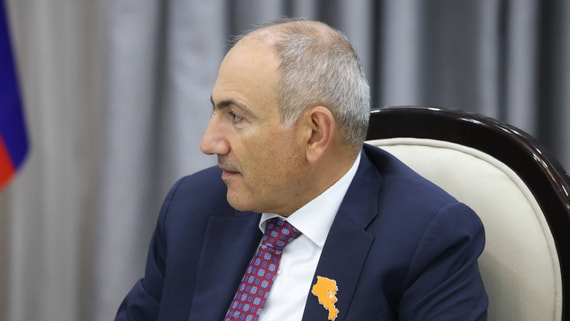
Armenian Prime Minister Nikol Pashinyan has made his first appearance at a Eurasian Economic Union (EAEU) council meeting in approximately eighteen months, marking a significant moment in the complex relationship between Armenia and the Russia-led economic bloc. This return to the negotiating table comes amid heightened tensions between Yerevan and Moscow, and raises important questions about Armenia’s future orientation in regional economic and political structures.
The Prime Minister’s prolonged absence from EAEU summits had been widely interpreted as a deliberate diplomatic signal reflecting Armenia’s growing frustration with its traditional ally Russia, particularly in the aftermath of the 2020 Nagorno-Karabakh war and subsequent developments in the region. Pashinyan’s reappearance at the council meeting suggests a pragmatic recalibration of Armenia’s approach, even as the country continues to explore closer ties with Western institutions.
Understanding the Eurasian Economic Union and Armenia’s Role
The Eurasian Economic Union, established in 2015, represents Russia’s most ambitious attempt to create an integrated economic space in the post-Soviet region. The bloc currently includes Russia, Belarus, Kazakhstan, Kyrgyzstan, and Armenia, with a combined population of approximately 180 million people and a gross domestic product exceeding two trillion dollars. The union aims to ensure free movement of goods, services, capital, and labor among member states, creating a single market that theoretically rivals the European Union in scope and ambition.
Armenia joined the EAEU in 2015 under the previous administration, a decision that came after the country abruptly abandoned plans to sign an association agreement with the European Union in 2013. For Armenia, EAEU membership has provided certain economic benefits, including access to the Russian labor market where hundreds of thousands of Armenians work and send remittances home, as well as favorable energy prices and trade conditions. However, the relationship has always been complicated by Armenia’s desire to maintain balanced foreign relations and avoid complete dependence on Moscow.
The Context Behind Pashinyan’s Absence
Pashinyan’s eighteen-month absence from EAEU summits reflected the deepening crisis in Armenian-Russian relations following the devastating 2020 war with Azerbaijan over Nagorno-Karabakh. Armenia lost control of significant territories, and many in Yerevan blamed Russia for failing to provide adequate support despite the countries’ mutual defense treaty and Russia’s military presence in the region. The situation deteriorated further in September 2023 when Azerbaijan launched a military operation that resulted in the complete exodus of ethnic Armenians from Nagorno-Karabakh, while Russian peacekeepers watched without intervening.
During this period, Armenia began taking unprecedented steps to distance itself from Russian-led security structures. The country froze its participation in the Collective Security Treaty Organization (CSTO), the post-Soviet military alliance, and began developing closer military and political ties with the United States, France, and the European Union. Armenian officials conducted joint military exercises with American forces and signed agreements on defense cooperation with Western partners, moves that would have been unthinkable just a few years ago.
Economic Realities and Strategic Calculations
Despite the political tensions, Armenia’s decision to maintain engagement with the EAEU reflects hard economic realities. Russia remains Armenia’s largest trading partner, and the Russian market is crucial for Armenian exports, particularly agricultural products, textiles, and processed goods. The remittances sent home by Armenian workers in Russia constitute a significant portion of the country’s GDP and provide essential income for thousands of families. Completely severing economic ties with the EAEU would impose severe costs that Armenia, with its limited economic options and landlocked geography, can ill afford.
Furthermore, Armenia has paradoxically benefited from Western sanctions on Russia, as some goods bound for Russia now transit through Armenian territory, boosting the country’s role as a trade intermediary. This position requires maintaining working relationships with both Western countries and Russia, creating a delicate balancing act that Pashinyan must navigate carefully. His return to EAEU meetings may signal an attempt to preserve these economic benefits while continuing to diversify Armenia’s foreign policy orientation.
Future Implications for Regional Dynamics
The trajectory of Armenia’s relationship with the EAEU will have significant implications for the broader post-Soviet space and the competition between Russia and Western powers for influence in the region. If Armenia successfully maintains its EAEU membership while simultaneously deepening ties with the West, it could establish a precedent for other countries seeking to avoid binary choices between Moscow and Brussels or Washington. However, Russia has historically shown little tolerance for such hedging behavior among its perceived sphere of influence, and the Kremlin may eventually pressure Armenia to make clearer commitments.
For now, Pashinyan appears to be pursuing a policy of strategic ambiguity, attending EAEU meetings while continuing to criticize Russian policy and explore alternative partnerships. This approach carries risks, as it may alienate both sides without fully satisfying either. Nevertheless, given Armenia’s vulnerable geopolitical position, surrounded by historically hostile neighbors and dependent on external security guarantees, the pursuit of a multi-vector foreign policy may represent the least bad option available to Yerevan’s leadership.
Expert Opinion: Pashinyan’s return to the EAEU summit represents tactical pragmatism rather than a strategic realignment toward Moscow. Armenia is likely to continue its gradual Western pivot while maintaining essential economic ties with Russia, creating a new model of post-Soviet state behavior that prioritizes national interest over bloc loyalty. The coming months will reveal whether Russia accepts this arrangement or demands Armenia choose sides definitively.