



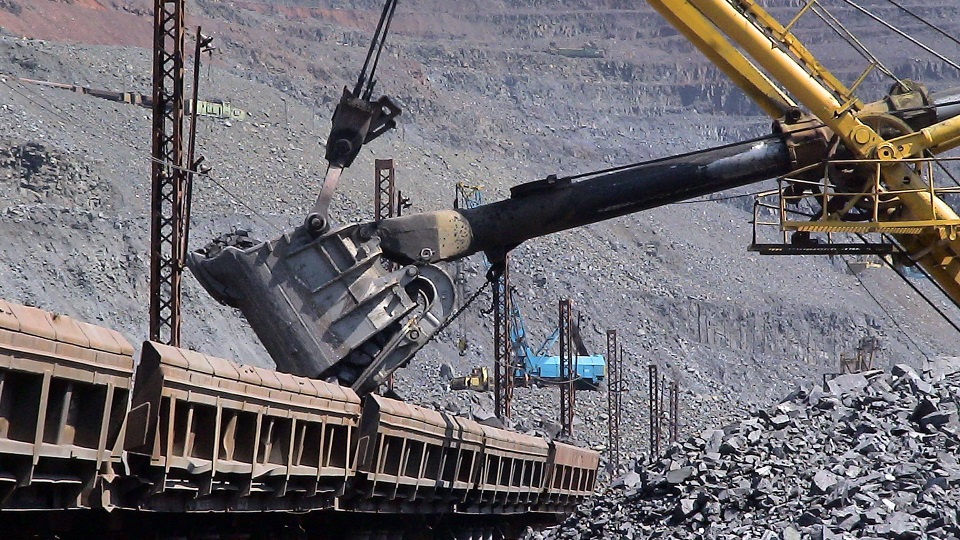
Ukraine’s Southern Mining and Processing Complex (Pivdennyi GOK), one of the country’s largest iron ore producers, has been forced to suspend operations due to the accumulation of export ore shipments that cannot be delivered by sea. The stoppage comes as a direct consequence of intensified Russian military attacks on commercial shipping vessels in the Black Sea, effectively disrupting Ukraine’s critical maritime export corridor. This development represents a significant blow to Ukraine’s mining industry and its already war-strained economy, highlighting how Russia’s naval warfare tactics continue to impact civilian infrastructure and international trade far beyond the immediate combat zones.
The Southern Mining Complex, located in the Dnipropetrovsk region, has been a cornerstone of Ukraine’s iron ore industry for decades. The facility produces millions of tons of iron ore concentrate and pellets annually, primarily destined for export markets across Europe, Asia, and the Middle East. With port facilities unable to safely receive and dispatch commercial vessels, the mine’s storage capacities have reached critical levels, leaving company management with no choice but to halt extraction and processing activities. This situation affects thousands of workers and has ripple effects throughout the regional economy.
Escalating Maritime Threats in the Black Sea
Russia’s recent intensification of attacks on commercial shipping in the Black Sea has created a climate of extreme danger for vessels attempting to transport Ukrainian goods. Since the collapse of the Black Sea Grain Initiative in July 2023, Russian forces have repeatedly targeted port infrastructure in Odesa and other Ukrainian coastal cities, as well as civilian cargo ships operating in international waters. These attacks have included missile strikes, drone assaults, and naval mine deployments, making maritime insurance costs prohibitively expensive and deterring shipping companies from entering Ukrainian ports. International maritime organizations have issued multiple warnings about the elevated risks in the region, with some insurers refusing coverage altogether for vessels bound for Ukrainian Black Sea ports.
The strategic importance of Black Sea shipping routes cannot be overstated for Ukraine’s economy. Before the full-scale invasion in February 2022, approximately 90% of Ukraine’s grain exports and a substantial portion of its metal and mineral exports transited through Black Sea ports. While the humanitarian grain corridor established with international mediation provided temporary relief, its termination has left Ukraine scrambling for alternative export routes through overland transportation via Poland, Romania, and other European neighbors. However, these land routes lack the capacity to handle the volume previously shipped by sea, creating bottlenecks and significantly increasing transportation costs.
Economic Impact on Ukraine’s Mining Sector
The suspension of operations at Southern GOK underscores the broader challenges facing Ukraine’s mining and metals industry during wartime. Ukraine historically ranked among the world’s top ten iron ore producers, with the sector contributing billions of dollars to the national economy and employing tens of thousands of workers. The current situation at Pivdennyi GOK mirrors difficulties experienced across the industry, where companies have been forced to reduce output, lay off workers, or redirect limited exports through congested alternative routes. Industry analysts estimate that Ukraine’s iron ore production has declined by approximately 50-60% since the start of the full-scale invasion, with maritime disruptions being a primary factor.
The economic consequences extend beyond immediate revenue losses. Ukraine’s steel and mining industries are interconnected with global supply chains, and disruptions affect international customers who have relied on Ukrainian iron ore for their operations. European steel manufacturers, in particular, have had to seek alternative suppliers, often at higher costs, which ultimately impacts consumer prices. Meanwhile, Ukrainian mining companies face mounting financial pressures, including maintenance costs for idle equipment, continued workforce obligations, and loan repayments, all while revenues have effectively ceased.
International Response and Future Outlook
The international community has condemned Russian attacks on civilian shipping, with several nations calling for stronger measures to protect commercial vessels in the Black Sea. Some experts have proposed the establishment of armed escort convoys or international naval patrols to safeguard merchant ships, though such proposals face complex diplomatic and military considerations. Turkey, which controls access to the Black Sea through the Bosphorus Strait, plays a crucial role in any potential resolution, though Ankara has sought to maintain a delicate balance between its NATO obligations and its relationship with Moscow.
For Ukraine’s mining industry and the broader economy, the path forward remains uncertain. Companies like Southern GOK may need to invest in expanded overland logistics capacity, though such investments require significant capital and time to implement. In the meantime, the accumulation of unsold inventory represents not just a logistical challenge but a financial crisis for enterprises already operating under extreme wartime conditions. The situation at Pivdennyi GOK serves as a stark reminder that Russia’s military campaign extends far beyond territorial objectives, deliberately targeting the economic foundations of Ukrainian statehood and the livelihoods of ordinary citizens.
Expert Opinion: The forced shutdown of major mining operations like Southern GOK represents Russia’s calculated strategy of economic warfare, designed to strangle Ukraine’s export capacity and deplete foreign currency reserves essential for the war effort. Unless the international community develops effective mechanisms to protect Black Sea commercial shipping, we can expect similar production halts across Ukraine’s export-dependent industries, potentially reducing the country’s GDP by an additional 3-5% in the coming year. The long-term viability of Ukraine’s mining sector may depend on substantial infrastructure investments in rail and road connections to European ports, fundamentally reshaping the country’s export logistics for years to come.