



The European Union is preparing to extend its carbon emissions trading system to cover flights departing for major international hub airports outside the bloc, including Dubai and Istanbul. This significant expansion of the EU’s climate policy framework has triggered strong opposition from airlines, who warn that the move will distort competition and burden European carriers with additional costs that their international rivals will not face. The decision marks one of the most ambitious attempts yet to address aviation’s growing contribution to global greenhouse gas emissions.
The extension means that airlines operating flights from EU airports to destinations like Dubai International Airport and Istanbul Airport will now be required to purchase carbon credits under the EU Emissions Trading System (ETS). This cap-and-trade mechanism, which has been a cornerstone of European climate policy since 2005, sets limits on total emissions and requires companies to buy allowances for each ton of CO₂ they release into the atmosphere. Until now, international aviation has largely been exempt from these requirements due to concerns about competitive disadvantages and the complexity of regulating global air travel.
Aviation Industry Sounds the Alarm
Major European airlines have condemned the proposal as a “historic mistake” that threatens to undermine the competitiveness of EU-based carriers. Industry representatives argue that while European airlines will face increased operating costs, their competitors from the Middle East and Turkey will continue operating without equivalent carbon pricing obligations. This asymmetry, they contend, will drive passengers to book connecting flights through non-EU hubs that do not impose such levies, ultimately shifting traffic away from European airports without achieving meaningful emissions reductions.
The International Air Transport Association and European airline lobbying groups have been particularly vocal in their criticism. They point out that aviation already participates in the Carbon Offsetting and Reduction Scheme for International Aviation (CORSIA), a global market-based measure developed by the International Civil Aviation Organization. Critics argue that layering EU-specific requirements on top of this international framework creates regulatory duplication and administrative burdens that disadvantage European operators. Some industry analysts estimate that the additional costs could add dozens of euros to ticket prices for long-haul flights, potentially influencing passenger booking decisions.
The Climate Imperative Behind the Policy
Supporters of the expanded ETS coverage argue that urgent action is necessary given aviation’s significant and growing environmental footprint. The aviation sector accounts for approximately 2.5% of global CO₂ emissions, but when factoring in non-CO₂ effects such as contrails and nitrogen oxides released at high altitudes, its total climate impact may be two to four times larger. Unlike many other sectors, aviation emissions have been increasing steadily, driven by growing global demand for air travel that has historically outpaced efficiency improvements in aircraft technology.
European policymakers maintain that the expansion is essential to achieving the bloc’s climate targets under the European Green Deal, which aims to make Europe climate-neutral by 2050. They argue that excluding international aviation from carbon pricing creates perverse incentives and allows one of the fastest-growing sources of emissions to escape accountability. The European Commission has emphasized that all sectors of the economy must contribute to decarbonization efforts and that aviation cannot remain a privileged exception indefinitely.
Geopolitical and Economic Implications
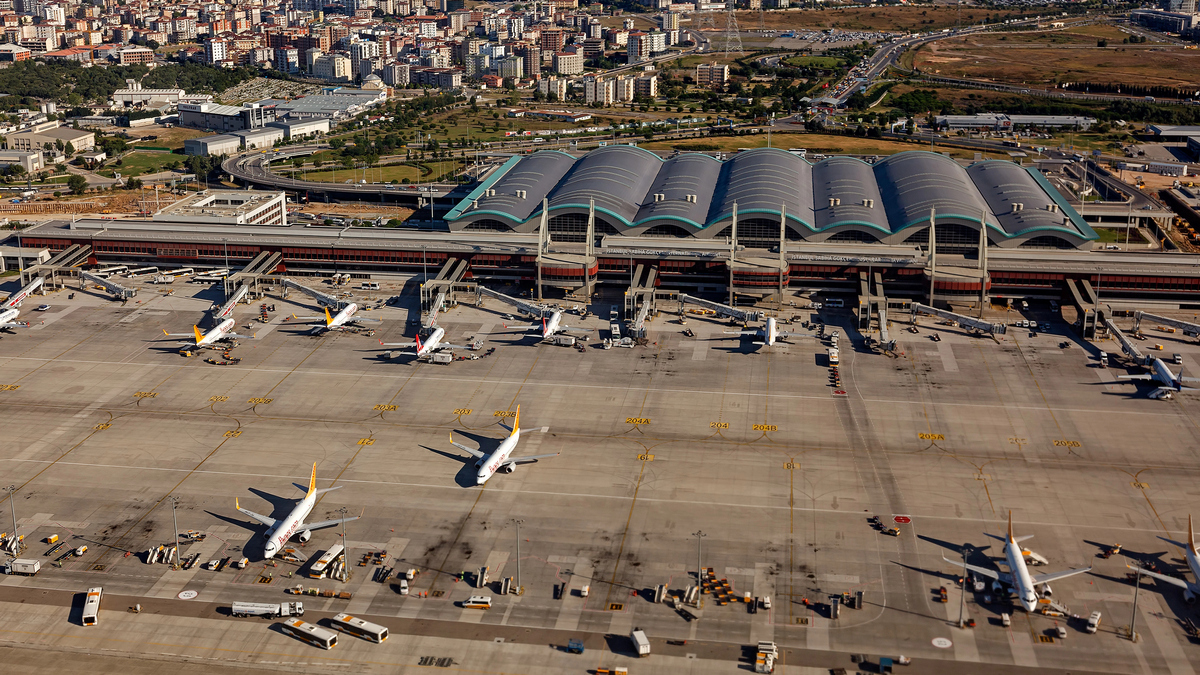
The decision to specifically include routes to Dubai and Istanbul carries significant geopolitical and economic implications. Both cities have emerged as major global aviation hubs, with airlines like Emirates, Qatar Airways, Turkish Airlines, and others using their strategic geographic positions to capture connecting traffic between Europe, Asia, Africa, and beyond. European legacy carriers have long complained about aggressive expansion by Gulf carriers, which benefit from government support and lower operating costs, and the new carbon levy is likely to intensify these competitive tensions.
Industry observers note that the policy could also affect diplomatic relations between the EU and countries hosting these hub airports. Turkey and the United Arab Emirates may view the measure as a unilateral imposition that discriminates against their aviation sectors. There are concerns that affected countries could retaliate with their own measures or challenge the EU’s approach at international forums. The situation echoes earlier disputes over the EU’s attempt to include all international flights in its ETS, which provoked threats of trade retaliation and was ultimately scaled back in 2012 following intense international pressure.
Expert Opinion: The EU’s decision to extend carbon pricing to international aviation routes represents a calculated gamble that environmental necessity outweighs competitive concerns. While the policy may create short-term disadvantages for European carriers, it could also establish a precedent that pressures other jurisdictions to adopt similar measures, potentially leading to more comprehensive global aviation carbon pricing. The coming months will reveal whether this move catalyzes broader international action or simply redistributes traffic to non-regulated hubs.