



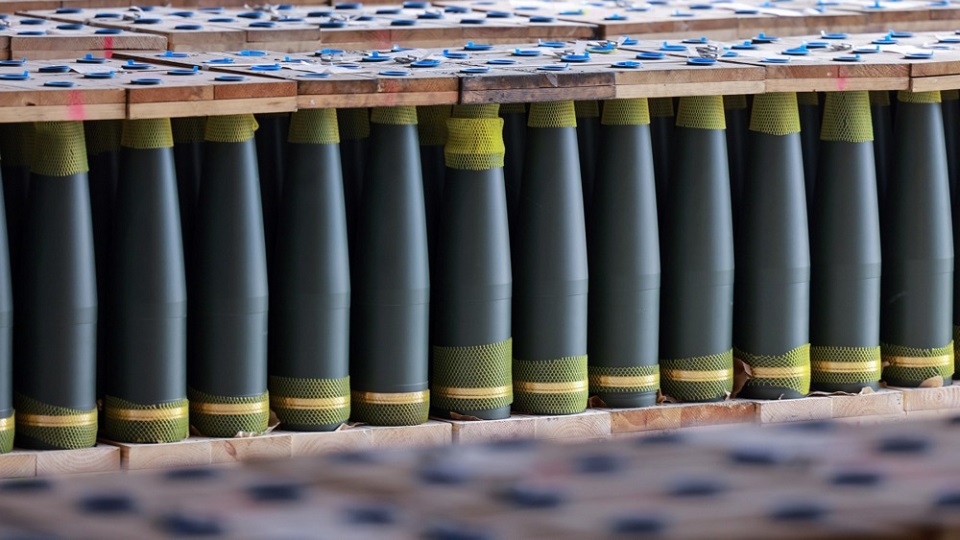
A newly constructed ammunition factory in Texas, funded with nearly half a billion dollars in taxpayer money, has failed to manufacture even one component for artillery shells despite being operational for over a year, according to a damning Pentagon audit released this week. The facility was designed to help replenish America’s stockpiles of 155mm artillery rounds, which have been severely depleted following massive shipments to Ukraine in support of its ongoing defense against Russian aggression. The revelation raises serious questions about defense procurement efficiency and the military-industrial complex’s ability to meet urgent wartime demands.
Critical Infrastructure Failure Amid Global Security Concerns
The Texas plant represents one of the most significant investments in American ammunition production capacity in decades. Awarded contracts totaling $469 million, the facility was intended to address a critical gap in U.S. defense capabilities that became starkly apparent after Russia’s full-scale invasion of Ukraine in February 2022. Since then, the United States has provided Ukraine with more than two million 155mm artillery rounds, dramatically drawing down reserves that military planners had accumulated over years for potential conflicts.
The 155mm howitzer round has proven to be the workhorse of modern artillery warfare, with Ukrainian forces at times firing thousands of shells daily to hold defensive lines and support counteroffensive operations. Before the conflict, the United States produced approximately 14,000 such rounds per month. Defense officials have stated their goal of ramping up production to 100,000 rounds monthly by late 2025, making the Texas facility’s production failures particularly troubling for strategic planners.
Systemic Issues in Defense Production Revealed
Pentagon auditors identified multiple factors contributing to the facility’s inability to meet production milestones. Supply chain disruptions, workforce training deficiencies, and equipment calibration issues were among the primary obstacles cited in the report. The audit also noted that critical machinery delivered to the plant required extensive modifications before it could be used for precision manufacturing of shell components, delays that were not adequately anticipated in the original project timeline.
Defense industry analysts note that the problems at the Texas plant reflect broader challenges facing American military manufacturing. Decades of reduced defense spending following the Cold War led to the consolidation of the defense industrial base, with many specialized suppliers exiting the market entirely. Rebuilding this capacity requires not just capital investment but also the development of skilled workforces and reliable supply chains for specialized materials and components.
Historical Context and Future Implications
The current ammunition shortage echoes similar challenges the United States faced during previous conflicts. During World War II, American industry famously converted civilian factories to military production, creating the “Arsenal of Democracy” that supplied Allied forces worldwide. However, today’s precision munitions require specialized manufacturing processes that cannot be easily replicated in converted facilities. The complexity of modern weapons systems means that expanding production capacity takes years rather than months.
Congressional oversight committees have already scheduled hearings to examine the audit findings and determine accountability for the production shortfalls. Several lawmakers have called for reforms to defense procurement processes, arguing that current systems prioritize bureaucratic compliance over actual results. The Pentagon has stated it is working closely with the contractor to address the identified issues and expects the facility to begin limited production within the coming months, though officials declined to provide specific timelines or guarantee that original production targets would ultimately be met.
Expert Opinion: This audit underscores a fundamental vulnerability in U.S. defense readiness that has been developing for decades. The inability to rapidly scale ammunition production suggests that in a prolonged conventional conflict, American forces could face critical supply shortages. Moving forward, the Pentagon must consider maintaining warm production lines and strategic reserves even during peacetime, accepting higher costs as the price of genuine military preparedness.