


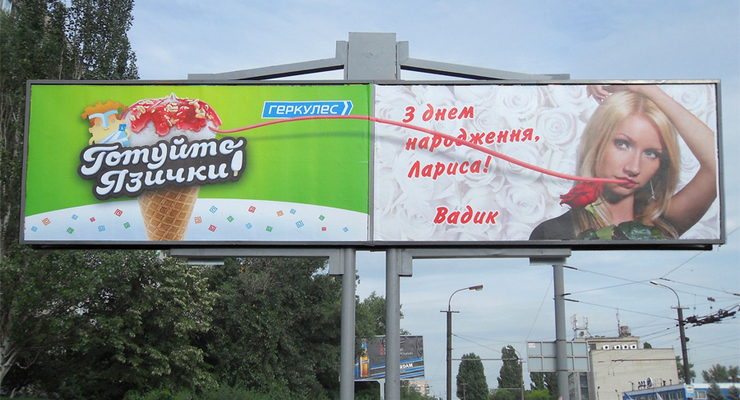
A landmark enterprise in Ukraine’s food industry has officially ceased to exist after a court declared bankruptcy for Hercules, once the dominant force in the country’s ice cream market. The company, which at its peak controlled a significant share of Ukraine’s frozen dessert sector, has seen its assets fall under Russian occupation, marking a tragic end to decades of business operations and representing yet another casualty of the ongoing conflict that has devastated Ukraine’s industrial base.
The bankruptcy ruling comes after years of struggle for the Donetsk-based company, which found itself in an impossible situation following Russia’s initial military incursion into eastern Ukraine in 2014 and the subsequent full-scale invasion in February 2022. Hercules had been a household name across Ukraine, with its products found in virtually every supermarket and corner store throughout the country. The company’s factories and production facilities, located in territories now under Russian control, have become inaccessible to their rightful owners, leaving creditors with little hope of recovering their investments.
A Storied History in Ukraine’s Food Sector
Hercules rose to prominence during the post-Soviet era when Ukraine’s food industry underwent massive transformation. The company capitalized on growing consumer demand and successfully modernized its production capabilities to compete with international brands entering the Ukrainian market. At its height, Hercules operated multiple production facilities and employed thousands of workers, contributing significantly to the regional economy of the Donetsk Oblast. The brand became synonymous with quality affordable ice cream for millions of Ukrainian families, building customer loyalty through consistent product quality and innovative flavors that catered specifically to local tastes.
Industry analysts note that Hercules’ fate mirrors that of hundreds of Ukrainian enterprises caught in the crossfire of geopolitical conflict. The company’s location in the industrial heartland of eastern Ukraine, once considered an advantage due to infrastructure and workforce availability, became its ultimate downfall. When fighting intensified in the region, normal business operations became impossible, supply chains collapsed, and the company lost access to both its production assets and its primary markets.
Economic Impact and Industry Transformation
The bankruptcy of Hercules represents more than just the failure of a single company; it symbolizes the broader destruction of Ukraine’s industrial capacity in occupied territories. Economists estimate that Ukraine has lost access to significant portions of its pre-war manufacturing base, with food processing being among the hardest-hit sectors. The ice cream market, specifically, has undergone dramatic restructuring as remaining domestic producers and international companies have moved to fill the void left by displaced manufacturers like Hercules.
Legal experts familiar with the case indicate that the bankruptcy proceedings were largely procedural, given the impossibility of recovering or liquidating assets located in occupied territory. Creditors face the grim reality that their claims may never be satisfied, as the physical assets that would normally be sold to cover debts remain beyond the reach of Ukrainian law. This situation has created unprecedented legal challenges for courts attempting to resolve commercial disputes involving properties and facilities in territories outside government control.
Looking Ahead: Uncertain Future for Displaced Businesses
The case of Hercules raises important questions about the future of Ukrainian businesses displaced by the conflict and whether any framework exists for their eventual recovery or compensation. Some industry observers suggest that post-war reconstruction efforts might include provisions for reviving such enterprises, though the timeline and feasibility of such plans remain highly uncertain. In the meantime, former employees, suppliers, and business partners are left to cope with the economic consequences of losing their livelihoods and commercial relationships with a company that once seemed like an unshakeable pillar of Ukrainian industry.
For ordinary Ukrainians, the disappearance of Hercules from store shelves serves as a daily reminder of the war’s far-reaching consequences. While newer brands have emerged to satisfy consumer demand, many still remember the distinctive packaging and familiar flavors of their childhood ice cream. The bankruptcy filing closes a chapter in Ukrainian business history, but the full accounting of economic losses from the conflict continues to grow with each passing month.
Expert Opinion: The Hercules bankruptcy exemplifies a troubling pattern that could affect dozens of similarly situated Ukrainian companies in the coming years. Legal frameworks for handling businesses with assets in occupied territories remain underdeveloped, and international precedents offer limited guidance. As the conflict continues, we may see a wave of similar proceedings that will reshape Ukraine’s corporate landscape and create lasting challenges for post-war economic reconstruction efforts.