




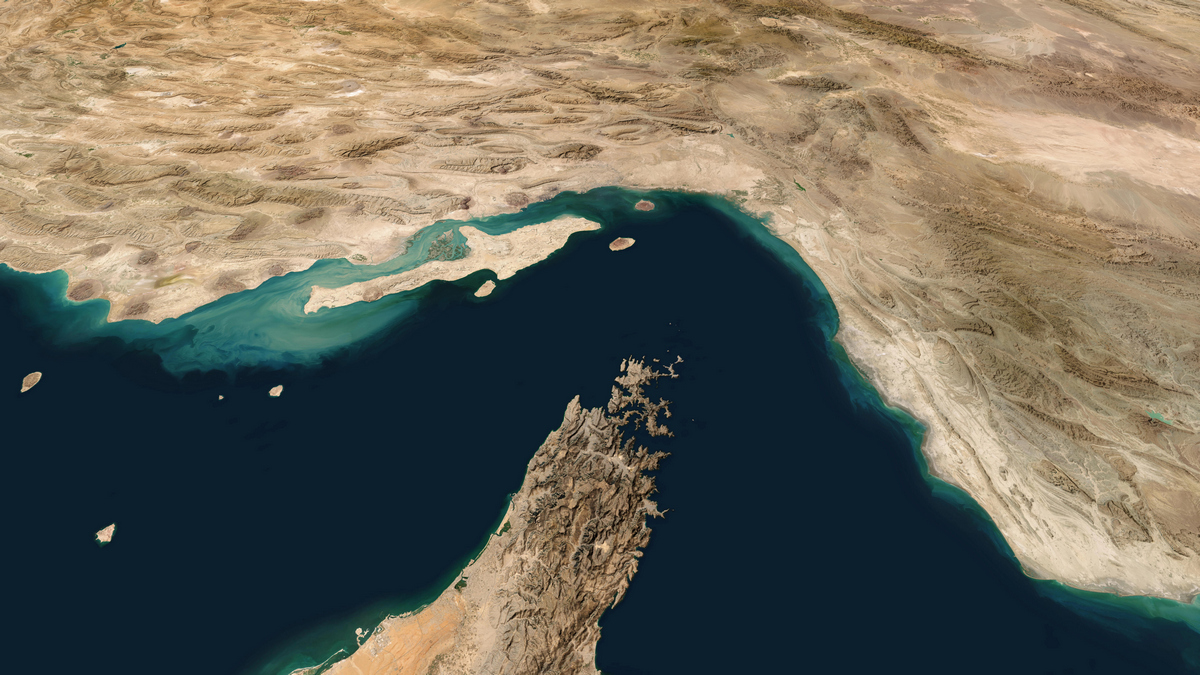
The United States Treasury Department has imposed new sanctions targeting Iranian companies that have been charging commercial vessels for safe passage through the strategically vital Strait of Hormuz. This move represents Washington’s latest effort to combat what officials describe as an extortion scheme operating in one of the world’s most critical maritime chokepoints. The sanctions effectively prohibit commercial ships from making payments to Iran in exchange for guarantees of safe transit through the Persian Gulf, a practice that has raised serious concerns among international shipping companies and maritime security experts.
The Strait of Hormuz, a narrow waterway connecting the Persian Gulf to the Gulf of Oman and the Arabian Sea, serves as the world’s most important oil transit point. Approximately 20-25 percent of global petroleum consumption passes through this corridor daily, making it an irreplaceable artery for international energy markets. The strait is only 21 miles wide at its narrowest point, with shipping lanes in each direction measuring just two miles across. This geographic vulnerability has long made the region a focal point for geopolitical tensions and maritime security concerns.
Background of Iranian Maritime Activities
Iran has historically leveraged its strategic position along the northern shore of the Strait of Hormuz to exert influence over regional shipping. The Islamic Revolutionary Guard Corps Navy maintains a significant presence in these waters, operating fast attack craft and other vessels capable of harassing commercial shipping. Over the past several years, there have been numerous incidents involving Iranian forces stopping, boarding, or seizing commercial vessels in the strait, often citing alleged violations of Iranian territorial waters or other pretexts. These actions have created an atmosphere of uncertainty that some Iranian-linked entities have apparently exploited by offering informal protection arrangements to shipping companies seeking to avoid potential confrontations.
The protection scheme allegedly works by having Iranian intermediaries approach shipping companies or vessel operators with offers of guaranteed safe passage in exchange for payment. While the exact fees have not been publicly disclosed, industry sources suggest they can represent significant additional costs for vessels transiting the region. The Treasury Department’s sanctions are designed to disrupt this revenue stream and eliminate the financial incentive for Iran to continue threatening international shipping as a means of generating income. American officials have characterized these activities as little more than sophisticated piracy operating under the guise of regional security services.
International Shipping Industry Response
The international maritime community has long expressed frustration with the precarious security situation in the Strait of Hormuz. Major shipping associations have called for enhanced naval patrols and international cooperation to ensure freedom of navigation. The new American sanctions provide shipping companies with clear legal guidance prohibiting payments to Iranian entities for protection services, effectively removing the option of compliance with such demands as a legitimate business expense. Industry representatives have generally welcomed this clarity while simultaneously calling for increased military presence to deter potential Iranian aggression against vessels that refuse to pay.
Several nations maintain naval forces in the region specifically to protect commercial shipping. The United States Fifth Fleet, headquartered in Bahrain, conducts regular patrols, while various European and Asian nations contribute vessels to multinational security initiatives. Despite these efforts, the sheer volume of traffic and the geographic constraints of the strait make comprehensive protection challenging. Iran’s ability to rapidly deploy small, fast vessels from numerous coastal bases means that potential threats can materialize quickly and unpredictably, creating ongoing risks for commercial operators regardless of international naval presence.
Broader Implications for Global Energy Security
The sanctions arrive at a time of heightened tensions in the Middle East, with various conflicts and diplomatic disputes contributing to regional instability. Any significant disruption to traffic through the Strait of Hormuz would have immediate and severe consequences for global energy markets, potentially causing dramatic spikes in oil and natural gas prices. Energy-importing nations in Asia, Europe, and elsewhere watch developments in the region closely, understanding that their economic well-being depends substantially on the uninterrupted flow of hydrocarbons through this narrow passage. The American action represents an attempt to address one element of the security equation without triggering the broader confrontation that all parties recognize would prove catastrophic for the global economy.
Looking forward, the effectiveness of these sanctions will depend largely on international cooperation and the willingness of shipping companies to accept increased short-term risks in exchange for longer-term stability. American officials have indicated that additional measures may follow if Iran continues its maritime harassment activities or attempts to circumvent the new restrictions through alternative payment mechanisms or intermediaries.
Expert Opinion: The Treasury Department’s sanctions represent a significant escalation in the economic pressure campaign against Iran’s maritime activities, though their practical impact will depend heavily on enforcement mechanisms and allied cooperation. Maritime security analysts anticipate that Iran may respond by increasing harassment of vessels that refuse protection payments, potentially creating a more volatile near-term security environment before any deterrent effect materializes. The coming months will prove critical in determining whether this approach succeeds in eliminating the protection racket or merely transforms it into a more overt confrontation.